Why Resilience Matters More Than Ever
Life has never been more convenient.
We can communicate instantly, access information within seconds, and order almost anything with a few clicks.
Yet despite these advantages, many Americans report feeling increasingly overwhelmed.
Economic uncertainty.
Workplace pressure.
Family responsibilities.
Constant digital distractions.
The challenges may be different from those faced by previous generations, but the emotional weight remains very real.
In a world filled with uncertainty, resilience has become one of the most valuable skills a person can develop.
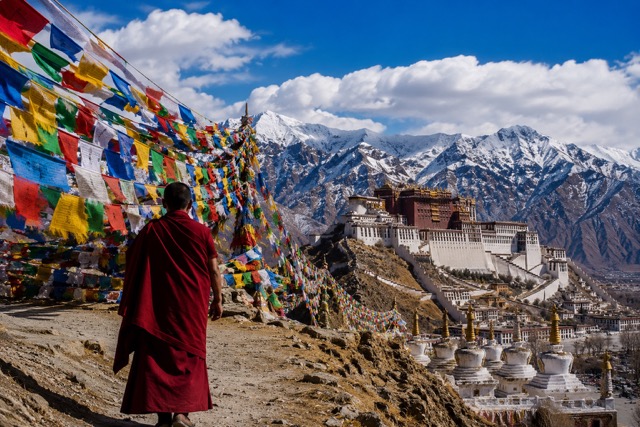
And few places embody resilience more powerfully than the Himalayas.
Life on the Roof of the World
The Tibetan Plateau is often called the "Roof of the World."
Stretching across vast mountains and high-altitude grasslands, it is one of the most extreme environments where people have lived for centuries.
Temperatures can be harsh.
Oxygen levels are lower.
Weather conditions can change quickly.
Life has never been easy.
Yet Tibetan communities have thrived in these conditions for generations.
Their survival has depended not only on physical strength but also on mental resilience, adaptability, and patience.
These qualities offer important lessons for people everywhere.
The Modern American Struggle
Today's challenges often look different.
Many people don't face extreme weather or remote landscapes.
Instead, they face:
· Chronic stress
· Burnout
· Financial uncertainty
· Information overload
· Social pressure
The problem is not always physical hardship.
It's mental exhaustion.
Many Americans feel like they're constantly running without ever reaching the finish line.
This is where resilience becomes essential.
Resilience is not about avoiding difficulties.
It's about learning how to move through them.
Strength Doesn't Mean Never Struggling
One common misconception is that resilient people never experience fear, stress, or setbacks.
In reality, resilience means continuing forward despite those challenges.
The mountains of Tibet provide a powerful metaphor.
Snowstorms come and go.
Seasons change.
Conditions become difficult.
Yet the mountains remain.
Tibetan culture often reflects this same mindset.
Challenges are viewed as part of life rather than something entirely unexpected.
Instead of asking, "Why is this happening to me?"
People learn to ask:
"What can this experience teach me?"
This shift in perspective can be incredibly powerful.
Patience in a World That Wants Everything Now
Modern culture values speed.
Fast delivery.
Instant results.
Immediate gratification.
But some of life's most meaningful achievements take time.
Relationships take time.
Personal growth takes time.
Healing takes time.
The Himalayas remind us that lasting transformation rarely happens overnight.
Mountains are shaped over thousands of years.
Rivers carve valleys slowly and steadily.
Nature teaches patience.
And patience is often a hidden form of resilience.
The Importance of Community
Another lesson from Tibetan culture is the value of community.
Life in remote regions often requires cooperation and mutual support.
People rely on one another during difficult times.
Modern American society can sometimes feel highly individualistic.
While independence is important, resilience becomes stronger when people feel connected.
Research consistently shows that supportive relationships improve emotional well-being and help people recover from adversity.
Strength grows when it is shared.
Finding Stability Through Daily Practices
Tibetan traditions often emphasize daily habits that help cultivate inner stability.
These practices can include:
· Quiet reflection
· Gratitude
· Mindfulness
· Spending time in nature
· Creating meaningful rituals
For modern Americans, these habits can provide an anchor during uncertain times.
Even a few minutes of intentional stillness each day can help create greater emotional balance.
Meaningful Objects as Reminders
Throughout history, people have used meaningful objects as symbols of their values and intentions.
A handcrafted pendant.
A mala bracelet.
A natural crystal.
A family heirloom.
These objects are not powerful because of what they are made of.
They are powerful because of what they represent.
They remind us of who we are and what matters most when life becomes challenging.
Nature's Lesson: Keep Moving Forward
One of the most inspiring aspects of the Himalayas is their ability to endure.
Through storms, seasons, and centuries of change, they remain.
Nature teaches us that resilience is not about perfection.
It's about persistence.
Growth doesn't happen because life becomes easy.
Growth happens because we continue despite difficulty.
Final Thoughts
The world will always present challenges.
Some are expected.
Others arrive without warning.
But the wisdom of the Himalayas reminds us that resilience is not something reserved for extraordinary people.
It is a quality that can be developed through patience, perspective, gratitude, and perseverance.
Like the mountains themselves, we may face storms.
But we can also learn to stand strong through them.
And sometimes, that strength becomes the foundation for our greatest growth.