English Version
A World That Never Stops
For many Americans, modern life feels like a constant race.
Emails arrive before breakfast.
Notifications interrupt every quiet moment.
Work often follows us home, and even our free time can feel scheduled and rushed.
While technology has made life more convenient, it has also created a culture where being busy is often seen as a badge of honor.
Yet despite all our advancements, many people report feeling more stressed, disconnected, and overwhelmed than ever before.
This raises an important question:
What if the answer isn't doing more—but learning how to be still?
Lessons From the Roof of the World
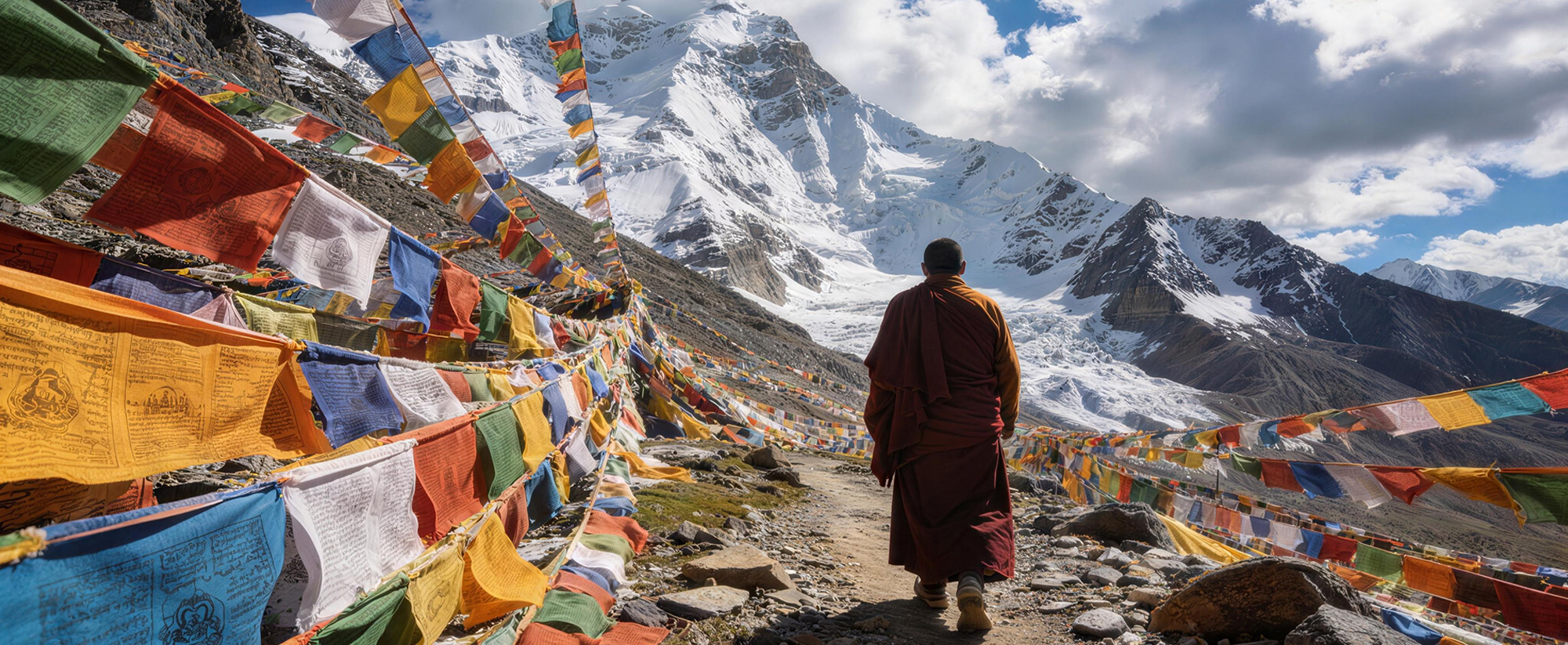
High in the Himalayas, Tibetan culture has developed over centuries in one of the most challenging environments on Earth.
Life in Tibet has never been easy.
Harsh weather, remote landscapes, and limited resources required resilience and adaptability.
Yet one of the most remarkable aspects of Tibetan culture is its emphasis on inner well-being.
Rather than constantly chasing external success, traditional Tibetan philosophy often focuses on cultivating:
· Gratitude
· Patience
· Compassion
· Presence
· Connection with nature
These values may seem simple, but they offer a powerful contrast to the fast-paced lifestyle many people experience today.
Why Americans Are Searching for Something Different
In recent years, there has been a growing interest in mindfulness, meditation, and intentional living across the United States.
People are increasingly seeking ways to reduce stress and reconnect with what matters most.
Many are realizing that happiness doesn't always come from achieving more.
Sometimes it comes from slowing down enough to appreciate what is already present.
This shift helps explain why ancient traditions from around the world—including those inspired by Tibetan culture—continue to resonate with modern audiences.
The Practice of Presence
One of the most valuable lessons Tibetan traditions offer is the importance of presence.
Being present means paying attention to the moment you're living right now.
It sounds simple, but in practice it can be surprisingly difficult.
Many of us spend our days thinking about future responsibilities or replaying past events.
As a result, we miss much of the life happening directly in front of us.
Tibetan practices often encourage people to pause, breathe, and reconnect with the present moment.
Even a few minutes of quiet reflection each day can help create a greater sense of balance and clarity.
A Different Relationship With Possessions
Another interesting aspect of Tibetan culture is the way meaningful objects are valued.
Items such as prayer beads, handcrafted jewelry, and cultural artifacts are often appreciated not simply for their appearance but for the stories and traditions they represent.
In today's consumer culture, many people are moving toward a similar mindset.
Rather than buying more things, they are choosing fewer items that hold personal meaning.
A handcrafted necklace.
A natural crystal.
A piece inspired by Himalayan traditions.
These objects become reminders of values, intentions, and personal growth.
Nature as a Teacher
Tibet's dramatic landscapes remind us of something modern life often makes us forget:
We are part of nature, not separate from it.
Research continues to show that spending time in nature can improve mood, reduce stress, and support overall well-being.
The Tibetan relationship with mountains, rivers, and open spaces reflects a deep respect for the natural world.
For many Americans living in cities and suburbs, reconnecting with nature has become an important part of creating a healthier lifestyle.
Bringing Tibetan Wisdom Into Daily Life
You don't need to travel to the Himalayas to benefit from these ideas.
Simple daily practices can help bring more balance into modern life:
· Start the day without immediately checking your phone.
· Spend a few quiet minutes reflecting on gratitude.
· Take a walk outdoors.
· Create a calming space at home.
· Surround yourself with meaningful objects that inspire mindfulness and intention.
Small changes often lead to powerful results over time.
Final Thoughts
The world is unlikely to become less busy anytime soon.
Technology will continue to evolve.
Schedules will remain full.
Life will always bring challenges.
But Tibetan culture reminds us that peace is not something we find after life slows down.
Peace is something we create within ourselves, even in the middle of a busy world.
And perhaps that is the lesson many of us need most today.