Why Does Life Feel So Fast?
For many Americans, life seems to move faster every year.
The day begins with checking notifications.
Emails arrive before breakfast.
Meetings fill the calendar.
Social media competes for attention.
Even moments meant for rest often become opportunities to multitask.
Technology has made life more efficient, but it has also created a culture where being busy is often celebrated.
Many people feel pressured to constantly do more, achieve more, and stay connected at all times.
Yet despite all this activity, many are left feeling exhausted rather than fulfilled.
This raises an important question:
What if the answer isn't moving faster—but learning how to slow down?
A World Obsessed With Speed
Modern society values speed.
Fast internet.
Fast delivery.
Fast results.
Fast success.
We're taught that productivity is a measure of worth.
The busier we are, the more successful we appear.
But speed comes with a cost.
When every moment is scheduled, life can begin to feel like a checklist instead of an experience.
Many people spend years rushing toward future goals without truly experiencing the present.
The result is often stress, burnout, and a feeling that life is passing by too quickly.
The Himalayan Perspective
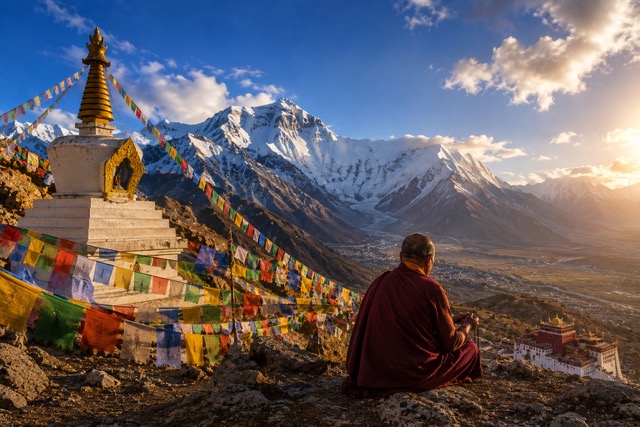
In the high mountains of Tibet, life follows a different rhythm.
For centuries, people have lived in close relationship with nature.
The changing seasons, weather patterns, and cycles of the land shape daily life.
Unlike the fast-paced environment of modern cities, life in the Himalayas often encourages patience.
The mountains do not hurry.
The rivers do not rush.
Nature unfolds at its own pace.
This environment has influenced cultural values that emphasize presence, mindfulness, and appreciation for the moment.
Why Slowing Down Isn't Being Lazy
One common misunderstanding is that slowing down means doing less or becoming less productive.
In reality, slowing down means becoming more intentional.
It's about focusing on what matters instead of reacting to everything demanding attention.
When we slow down, we often:
· Make better decisions
· Experience less stress
· Improve relationships
· Increase creativity
· Feel more connected to ourselves
Slowing down isn't about avoiding responsibility.
It's about approaching life with greater awareness.
The Hidden Cost of Constant Busyness
Many Americans wear busyness like a badge of honor.
"Busy" has become the default answer when people are asked how they're doing.
But constant busyness can have consequences.
Research continues to link chronic stress with emotional exhaustion and reduced well-being.
When people never pause, they lose opportunities to reflect, recharge, and appreciate what they've accomplished.
The problem isn't hard work.
The problem is never stopping.
Lessons From Tibetan Daily Life
Traditional Tibetan culture includes many small moments of pause throughout the day.
These practices encourage reflection and presence.
Whether through quiet contemplation, appreciation of nature, or meaningful rituals, the focus is often on being fully engaged with the current moment.
Modern Americans can apply similar principles without dramatically changing their lifestyles.
Simple habits can make a significant difference.
For example:
· Enjoying a morning cup of tea without distractions
· Taking a walk without checking a phone
· Spending a few minutes in silence
· Watching a sunset without taking a photo
· Practicing gratitude before bed
These moments may seem small, but they help reconnect us with life itself.
Creating Space for What Matters
One reason many people feel overwhelmed is that there is little space in their lives.
Every hour is occupied.
Every moment is planned.
Yet meaningful experiences often require space.
Creativity requires space.
Reflection requires space.
Relationships require space.
When we slow down, we create room for the things that truly enrich life.
We begin to notice beauty that was always there.
We become more present with loved ones.
We learn to appreciate ordinary moments.
Meaningful Objects and Mindful Living
Throughout many traditional cultures, including Tibetan culture, meaningful objects often serve as reminders to slow down and reconnect.
A handcrafted piece of jewelry.
A crystal displayed in a quiet corner.
A meaningful keepsake collected during travel.
These items are not valuable because of their price.
They are valuable because of what they represent.
They remind us to pause.
To reflect.
To remember what matters most.
Nature Teaches Us to Slow Down
One of the most powerful teachers of patience is nature.
Mountains grow slowly.
Trees mature over decades.
Rivers shape landscapes over centuries.
Nature reminds us that not everything valuable happens quickly.
Many Americans are rediscovering this lesson through hiking, camping, gardening, and spending time outdoors.
The more time we spend in nature, the more we realize that slowing down is often the fastest way to reconnect with ourselves.
Final Thoughts
The modern world will probably continue to move faster.
Technology will continue to evolve.
Schedules will remain busy.
But we still have a choice.
We can choose moments of stillness.
We can choose presence over distraction.
We can choose quality over speed.
The wisdom of the Himalayas reminds us that life is not a race to be completed.
It is an experience to be lived.
And sometimes the most meaningful thing we can do is simply slow down.