
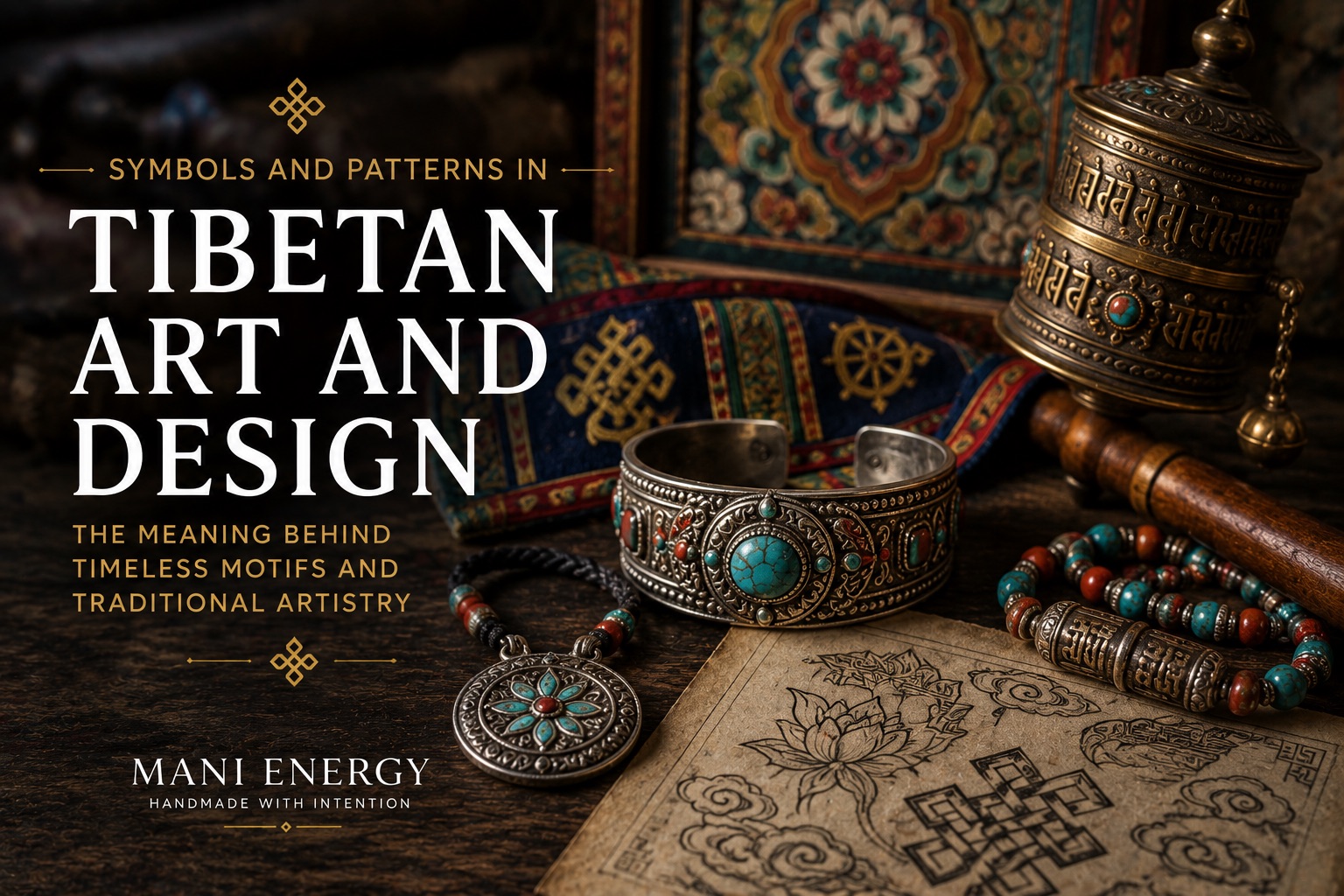
Symbols and Patterns in Tibetan Art and Design
Traditional Tibetan art is known for its rich symbolism, intricate details, and vibrant visual language. For centuries, artists and craftspeople have incorporated meaningful patterns into architecture, textiles, jewelry, and decorative objects.
Today, these designs continue to inspire creators around the world.
The Importance of Symbolism
Symbols play an important role in Tibetan artistic traditions.
Rather than serving as simple decoration, many patterns communicate cultural stories, values, and connections to the natural world.
These visual elements help preserve traditions across generations.
Geometric Patterns
Geometric motifs are commonly found in Tibetan design.
Repeating shapes create balance and harmony while demonstrating the skill of the artisan. These patterns often appear in jewelry, woven textiles, and architectural details.
Nature as Inspiration
The mountains, rivers, skies, and wildlife of the Himalayan region have long influenced artistic expression.
Artists frequently incorporate flowing lines, cloud motifs, floral elements, and landscape-inspired designs into their work.
These themes reflect a close relationship between culture and environment.
Handmade Artistry
Traditional Tibetan design emphasizes craftsmanship and attention to detail.
Whether carved into metal, woven into fabric, or engraved into decorative objects, each pattern requires patience and skill to create.
This dedication to quality remains one of the defining characteristics of handmade Tibetan-inspired art.
Modern Appreciation
Today, people around the world are drawn to Tibetan-inspired design because of its beauty, authenticity, and cultural depth.
Contemporary artisans continue to reinterpret traditional motifs while honoring their artistic roots.
Final Thoughts
The symbols and patterns found in Tibetan art offer a fascinating window into a rich cultural heritage.
Their enduring beauty reminds us that art can preserve history, tell stories, and connect generations through creativity and craftsmanship.
